
In-home kinesiology is guided movement therapy delivered in your home. A trained kinesiologist visits you and builds an exercise plan based on your needs and space.
The goal is simple. Improve strength, mobility, balance, and daily function without clinic visits.
This service works well for people who want support but prefer the comfort of home.
What does an in-home kinesiologist do?
A kinesiologist studies how the body moves. In a home visit, they watch how you walk, sit, stand, and handle daily tasks.
Based on this, they design a safe exercise program.
Sessions may include:
Strength exercises
Balance training
Mobility work
Post-injury rehab support
Fall prevention drills
Functional movement practice
The focus stays on real-life movement, not gym-style workouts.
For example, instead of random leg lifts, you may practice standing up from your own chair safely.

Why choose in-home care?
Many people struggle to attend clinic appointments. Travel, pain, fatigue, or busy schedules get in the way.
In-home kinesiology removes that barrier.
You receive one-on-one attention in a familiar space. The kinesiologist can also spot home hazards that affect safety, such as loose rugs or poor stair support.
This makes the care more practical and easier to follow.
Who benefits most from in-home kinesiology?
This service helps a wide range of people. Some groups benefit more than others.
Seniors who want to stay independent
Older adults often notice changes in balance and strength. Small declines can lead to falls or loss of confidence.
In-home kinesiology builds safe movement habits. It helps seniors keep doing daily tasks on their own.
People recovering from injury or surgery
After surgery or injury, movement can feel stiff and uncertain. Clinic visits may also feel tiring.
Home sessions allow gradual, guided recovery. Exercises match the stage of healing and the person’s comfort level.
Adults with mobility limits
Some people live with conditions that make travel hard. Chronic pain, neurological conditions, or joint issues can make clinic visits stressful.
In-home care brings support directly to them.
Busy professionals
Not every client is elderly or injured. Many working adults choose home sessions because of time limits.
Short, focused visits fit better into packed schedules.
People who feel unsure exercising alone
Many people know they should exercise but worry about doing it wrong.
A kinesiologist provides clear guidance and real-time correction. This builds confidence and reduces injury risk.
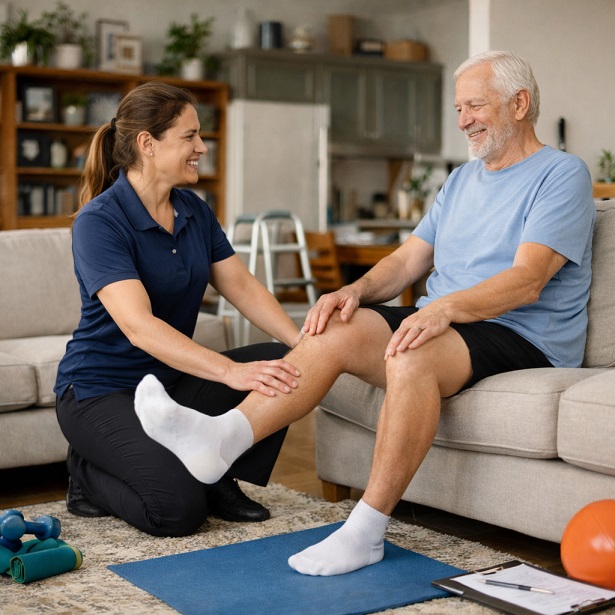
What happens during a typical visit?
Most first visits start with an assessment. The kinesiologist asks about health history, goals, and current limits.
They then watch how you move.
From there, they create a plan and guide you through exercises. Programs change over time as strength and mobility improve.
Equipment is usually simple. Many exercises use body weight, resistance bands, or items already in the home.
Is in-home kinesiology the same as physiotherapy?
They share some overlap but are not identical.
Physiotherapy often focuses on diagnosis and medical treatment of injuries.
Kinesiology focuses more on movement quality, strength, and long-term function.
Many people use both services at different stages of recovery.
The bottom line
In-home kinesiology brings guided movement care to your doorstep. It removes travel stress and makes exercise more relevant to daily life.
It works well for seniors, injury recovery, mobility challenges, and busy adults.
When movement improves, daily life usually becomes easier. That is the real value of in-home kinesiology.