Core Connection Mobile Physiotherapy logo

7 Important Functional Movements

Disclaimer: This tool is intended for general educational purposes only and does not replace individualized medical advice. For an individualized plan, please see a physiotherapist before trying new exercises.
1

Explore & Customize Movements

Click the plus button to add an exercise to your custom sheet. Toggle the level badges below to adapt each exercise to your current level of physical comfort:

Move safely: stay in control, and stop right away if you feel pain, chest tightness, or dizziness. Check with your physical therapist before starting a new routine.

The Squat

(Glutes, Quads)

Helps with: Getting out of a chair, Transferring without an overhead lift, Reaching items on the bottom shelf.

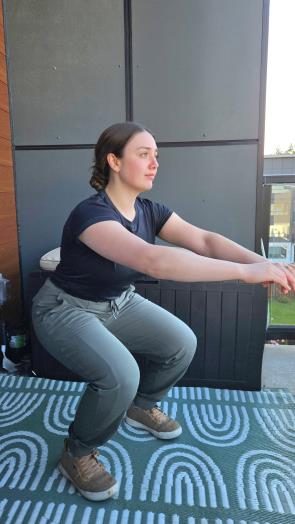
Supported (Chair Stand): Position a sturdy chair behind you. Touch your glutes lightly to the seat, then stand up immediately without rest.
Form Tip: Touch lightly; do not sit fully down to maintain leg tension.

Recommended: 2 sets of 10 reps

The Lunge

(Glutes, Quadriceps)

Helps with: Reaching items on the floor, Getting up from the ground, Going up stairs.

Supported (Counter Lunge): Stand next to a counter or sturdy chair for light hand support, then step back into a backward lunge.

Form Tip: Keep hand support light to challenge leg stability.

Recommended: 2 sets of 8 reps per leg

The March

(Hip Flexors)

Helps with: Preventing catching toes on the ground, Stepping over obstacles and into a car, Going up stairs.

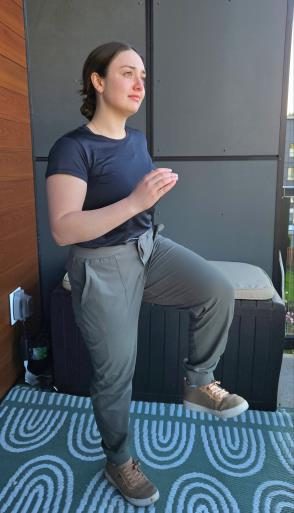
Standing March: Stand tall and lift one knee toward your chest, lower it, then repeat on the opposite side in a slow, controlled manner.
Form Tip: Avoid leaning backwards as your knee lifts.

Recommended: 2 sets of 15 marches total

The Bridge

(Glutes, Hamstrings)

Helps with: Maintaining bed mobility, Standing up straight.

Standard Bridge: Lie on your back with knees bent and feet flat on the floor. Squeeze your glutes and lift hips toward the ceiling.

Form Tip: Keep your knees tracking straight; do not let them flare out.

Recommended: 2 sets of 10-12 reps

The Push-Up (Push)

(Pectorals, Triceps)

Helps with: Opening doors, Getting up from the ground, Pushing up from a chair.

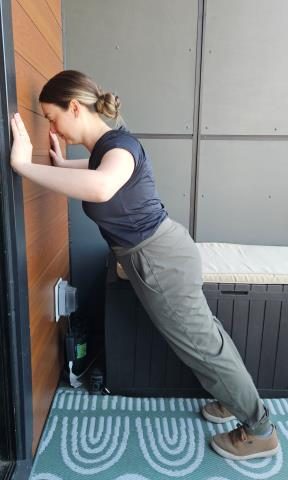
Wall Push-Up: Place hands shoulder-width apart on a wall. Step feet back, bend elbows to lower chest toward the wall, then push away.

Form Tip: Keep body straight; don't let your hips sag.

Recommended: 3 sets of 8-10 reps

The Row (Pull)

(Lats, Biceps)

Helps with: Opening heavy doors, Pulling yourself up, Rolling over in bed.

Seated Band Row: Sit on a chair with legs extended. Loop a band around your feet, hold the handles, and row toward your stomach.

Form Tip: Sit tall; do not lean backward as you pull.

Recommended: 2 sets of 12 reps

The Overhead Press

(Deltoids, Triceps)

Helps with: Reaching items from the top shelf, Putting on a shirt or coat, Brushing your hair.

Seated Press (No Weight): Sit tall in a chair. Make fists at shoulders and press arms straight up, focusing on joint range of motion.

Form Tip: Focus on opening up the shoulder joint fully at the top.

Recommended: 2 sets of 12 reps

Functional Routine

My Routine Blueprint

Selected Exercises
  • The SquatLevel: Supported (Chair Stand)
  • The MarchLevel: Standing March
  • The Push-Up (Push)Level: Wall Push-Up

Adaptive Training

If you are unsure of your technique or struggle with your balance, please reach out to a physiotherapist to work with you one-on-one.

Book Home Assessment

Looking to improve leg and core strength safely?

Work with a physiotherapist to master functional squats, bridges, and lunges using safe, progressive loads.